What Is a Mortsafe? The Iron Cages Scotland Put Over Graves to Stop Body Snatchers
A mortsafe is an iron cage or frame set over a fresh grave to keep body snatchers out. Why they were needed, where you can still see them, and how the Anatomy Act of 1832 ended the trade.
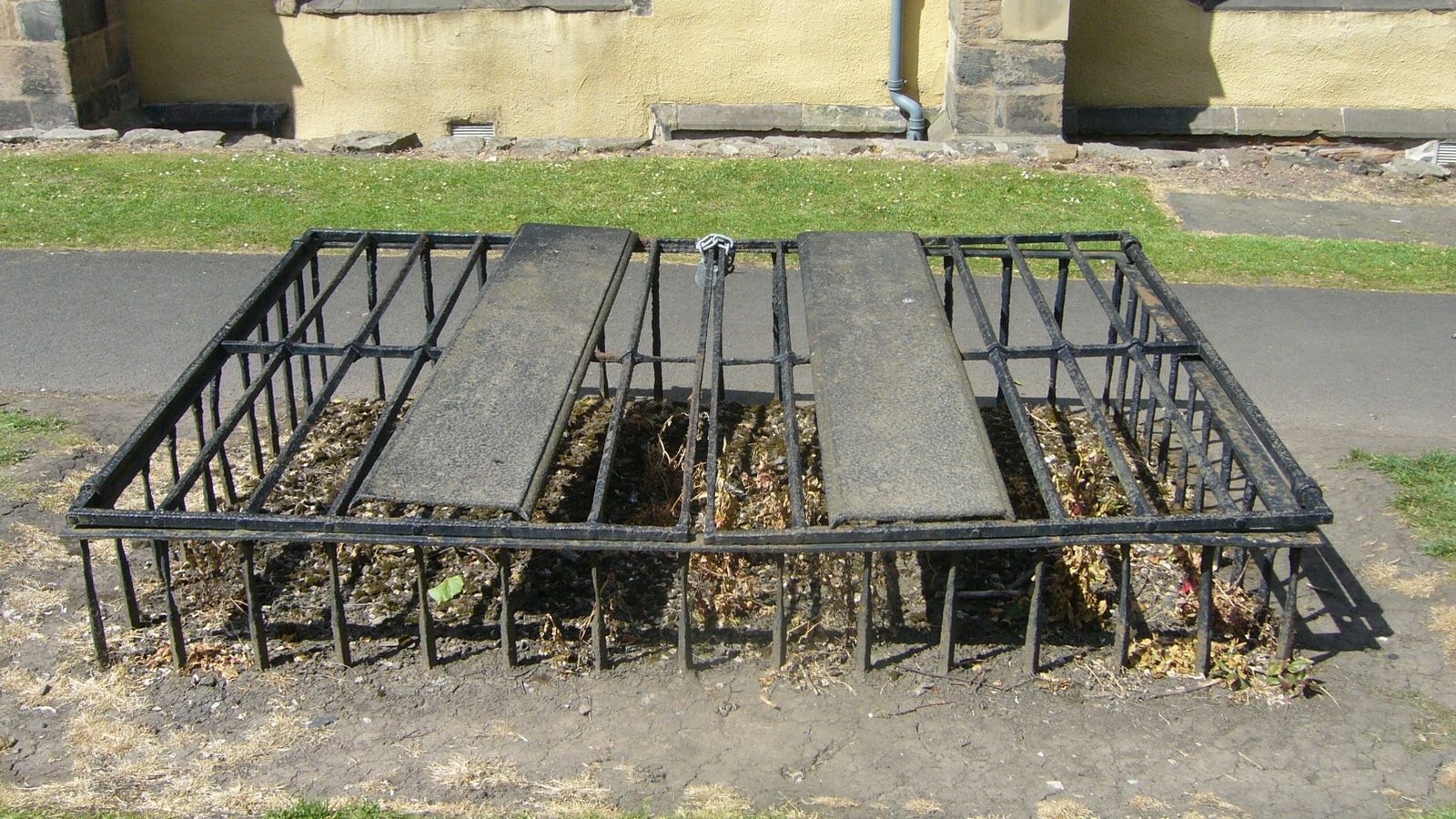
Walk through Greyfriars Kirkyard in Edinburgh and you'll find iron cages standing over old graves, as if something underneath needed to be kept in. The opposite is true. They were built to keep people out.
A mortsafe is an iron cage, frame or grille placed over a grave, used in Scotland during the body-snatching era that ended with the Anatomy Act of 1832, to stop body snatchers from digging up the newly buried and selling them to anatomy schools. Families left the mortsafe in place until the body inside had decayed too far to be worth stealing. At Greyfriars you can still see two different types.
Why anyone would steal a body
The short version is that medicine needed corpses and the law didn't supply enough of them.
Britain's legal supply was tied to the gallows. The Murder Act of 1752 allowed the bodies of executed murderers to be handed over for dissection, according to the UK Parliament's history of the period. As medical teaching grew and more schools opened, demand far outran that supply. By the late eighteenth century there was a serious shortage of bodies available for anatomy.
Into that gap stepped the resurrection men, gangs who dug up fresh graves at night, or took bodies from mortuaries, and sold them to anatomy schools or straight to students. Sometimes anatomy teachers and students did the digging themselves. Edinburgh, one of the great centers of medical teaching, had both the demand and the graveyards to supply it, along with a crop of private anatomy schools competing for students.
The Scottish Archaeological Research Framework (ScARF) traces the demand to a shift in how medicine learned. Once doctors stopped relying on classical authorities and started trusting what they could observe, students needed to see the inside of real bodies. The black market that grew to meet that need caused real public anger, and ScARF notes a number of riots and disturbances aimed at the anatomy schools themselves.
ScARF describes the fear this created as leaving a physical mark on the landscape, an archaeology of the fear of grave robbing. Mortsafes are one part of it. So are "jankers" (heavy stone or iron covers laid over graves), watch towers in kirkyards, and other security measures families paid for to protect their dead.
What a mortsafe looked like
Mortsafes came in more than one form. Greyfriars alone has two different designs of iron cage. ScARF groups them with "mortcages" and with jankers, the heavy slabs of stone or metal laid flat over a grave. One example ScARF illustrates is a heavy janker in the kirkyard at Kilmun, on the Cowal peninsula. Whatever the design, the point was the same: make the grave slow and hard to break into, and keep the body undisturbed through the weeks when it was still worth something to an anatomist.
A mortsafe only had to protect a grave until the body was no longer "fresh" enough to sell, in Archaeology Scotland's phrase. The ones still standing are reminders of a few decades when grief came with ironwork and a night watch.
Why the fear ran so deep
It's worth asking why people paid for iron cages at all. ScARF points out that the theology of the day was clear that God could resurrect a body whatever condition it was in, and that science increasingly saw a corpse as a broken machine. Neither stopped the dread. ScARF suggests that a popular sense of the newly dead body as still somehow powerful, even aware, combined with a modern idea of the self as closely tied to one's own body. The thought of a parent or child being cut up on a dissecting table was unbearable, whatever the sermons said, and families with money spent it on ironwork.
Burke and Hare: when the trade turned to murder
In 1828 the trade in bodies reached its worst point in Edinburgh. William Burke and William Hare didn't rob graves. They murdered people, mostly the poor and the vulnerable, and sold the bodies to the anatomist Robert Knox. Archaeology Scotland's Greyfriars resource puts the number of victims at sixteen. Hare turned King's evidence, and Burke was hanged in 1829.
Our full account of the case, including what the surviving records do and don't prove, is in Burke and Hare: Halloween, 1828.
The murders didn't create the fear of body snatching, and surgeons had been urging Parliament to change the law for years. But the revelation of the killings in 1828 caused a huge public outcry, in Parliament's own words, and it showed how far the market for bodies could go.
The Anatomy Act of 1832
In 1828 a select committee of the House of Commons investigated how bodies for medical research were obtained, but the first attempt at a new law failed, according to Parliament's own history. The Royal College of Surgeons in London didn't want to give up its privileges, and some MPs were dismayed at the idea of making the bodies of the poor available for dissection. In 1832 Parliament passed the Anatomy Act. It gave surgeons and their students legal access to bodies from workhouses, hospitals and prisons that went unclaimed 48 hours after death, and it allowed a person to donate a next of kin's body for study. The Act also set up a system of licences for anatomists and government inspectors to oversee the work.
The Act shifted the burden. Instead of the freshly buried of every class, the bodies that reached anatomy tables were now overwhelmingly the unclaimed poor. Historian Ruth Richardson's Death, Dissection and the Destitute (1987) is the classic study of how that change landed on the people least able to object.
For graveyards, though, the effect was the one families had wanted. With a legal supply in place, digging up the dead stopped paying, and the mortsafe slowly became a curiosity.
From stolen bodies to written consent
The 1832 Act lasted a long time. It was replaced by the Anatomy Act 1984, which let people donate their own bodies for anatomical examination. The Human Tissue Act 2004 created the Human Tissue Authority and made personal informed consent the basis for body and organ donation in England, Wales and Northern Ireland. In Scotland, where the mortsafes stand, the Human Tissue (Scotland) Act 2006 requires written authorisation before a person's body or organs can be used for medical science. A system that once ran on stolen corpses now runs on donors' signatures.
Mortsafes, safety coffins and the fear of the grave
The nineteenth century was full of inventions aimed at the grave. Mortsafes kept the living out. Safety coffins tried to let the living out, in case someone had been buried by mistake. Both sprang from a time when people did not fully trust what happened after the burial. Read about the second fear in our piece on safety coffins and premature burial.
The grave robber also changed how people felt about cemeteries themselves. For a fuller look at how a fresh grave went from a place to fear thieves to a place to fear ghosts, see how cemeteries became haunted.
Seeing a mortsafe today
Greyfriars Kirkyard is the easiest place to start. It's in central Edinburgh, and the mortsafes are among its most photographed features. Mortsafes and related security features also survive in other Scottish kirkyards. If you visit:
- Remember these are graves, often still visited by descendants.
- Don't climb on or lean against the ironwork. Old iron and old stone both break.
- Check opening times. Many kirkyards are owned and managed by churches or local councils.
- Photograph freely where it's allowed, but keep the people buried there in mind.
A short glossary
- Mortsafe: an iron cage, frame or grille over a grave to stop body snatchers.
- Janker: a heavy stone or iron cover placed over a grave for the same reason.
- Watch tower or watch house: a small building in a kirkyard where guards sat at night to watch fresh graves.
- Resurrection men: the gangs who dug up bodies to sell to anatomy schools.
- Anatomy Act 1832: the law that gave anatomists legal access to unclaimed bodies and licensed their work.
How morbidly curious are you? Find out with our ten-question death curiosity quiz.
Want more true stories from the graveyard? Join the mailing list on our home page.
Sources
- UK Parliament, Living Heritage, "Body snatching" (Murder Act 1752; 1828 select committee; opposition from the Royal College of Surgeons and MPs; Anatomy Act 1832 and the 48-hour rule; Anatomy Act 1984; Human Tissue Act 2004; Human Tissue (Scotland) Act 2006). https://www.parliament.uk/about/living-heritage/transformingsociety/private-lives/death-dying/dying-and-death/bodysnatching/
- Anatomy Act 1832 (2 & 3 Will. 4 c. 75), text (licences, inspectors). https://www.irishstatutebook.ie/eli/1832/act/75/enacted/en/html; summary: https://statutes.org.uk/site/the-statutes/nineteenth-century/1832-2-3-william-4-c-75-the-anatomy-act/
- Scottish Archaeological Research Framework (ScARF), "Case Study: Grave Robbing" (mortsafes, jankers, kirkyard watch towers; riots at anatomy schools; the Kilmun janker; reasons for the dread of dissection). https://scarf.scot/national/scarf-modern-panel-report/modern-case-studies/case-study-grave-robbing/
- Archaeology Scotland, Greyfriars Artefact Investigation Kit (two types of mortsafe at Greyfriars; Burke and Hare's sixteen victims; Hare's King's evidence; Burke hanged 1829). https://www.archaeologyscotland.org.uk/heritage-resources-portal/wp-content/uploads/2023/03/Greyfriars-Artefact-Investigation-Kit.pdf
- Historic Environment Scotland, listing LB27029, Greyfriars Churchyard. https://portal.historicenvironment.scot/designation/LB27029
- Richardson, R. (1987). Death, Dissection and the Destitute. Routledge & Kegan Paul.