Why Are Graves 6 Feet Deep? A 1665 Plague Order, and What the Law Actually Asks For Now
The six-foot grave traces to London's 1665 plague orders. Today's laws ask for far less: California, North Carolina and Texas want 18 inches to 2 feet of cover.
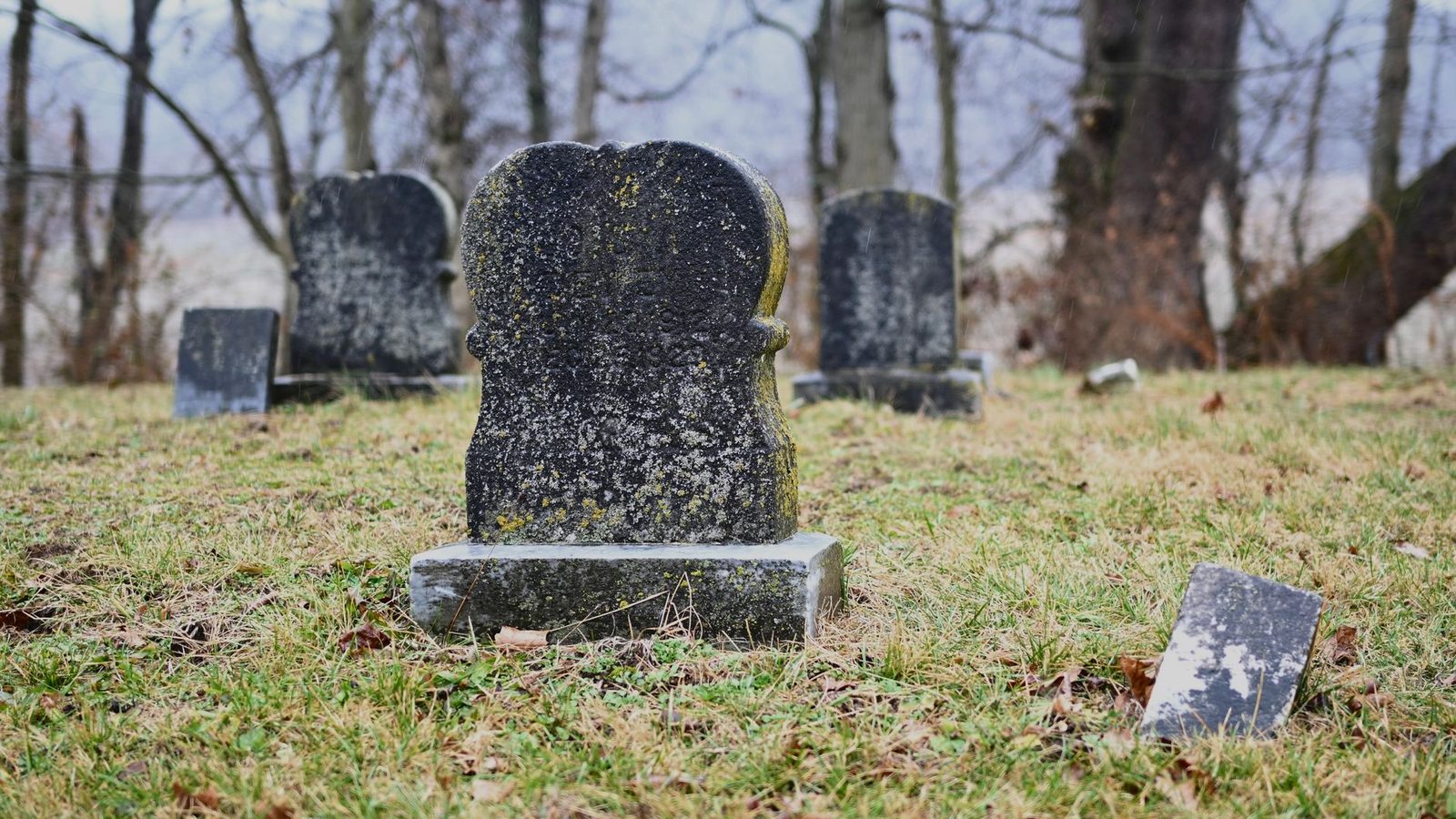
"And that all the Graves shall be at least six foot deep."
That single line, from an emergency order issued by the Lord Mayor and Aldermen of the City of London during the plague of 1665, is the oldest written source most people can point to for the six-foot grave. It's a short answer to a question nearly everyone has wondered about at a funeral. The longer answer is stranger: the six-foot rule was a plague measure for one city, and the modern laws that actually govern burial depth usually ask for much less.
The order of 1665
The document's full title is Orders Conceived and Published by the Lord Major and Aldermen of the City of London, Concerning the Infection of the Plague, printed in London by James Flesher in 1665. It reads like a city under siege.
Every parish was to appoint examiners to find out which houses were infected, and two watchmen for each shut-up house, one for the day and one for the night. "Women-Searchers" of "honest reputation" were to be sworn to view the bodies of the dead and report whether each person had died of the infection or of something else. Every infected house was to be marked with a red cross "of a foot long, in the middle of the door," with the printed words Lord have mercy upon us set above it. Dogs found in the City were to be killed by appointed dog-killers. Public feasting, including dinners at taverns, was to stop, and the money saved was to go to the poor.
The burial section is just as blunt. Plague dead were to be buried "either before Sun-rising, or after Sun-setting." Neighbors and friends were not to follow the coffin to church. No corpse that died of infection could lie in a church during prayers, sermons or lectures. Children were to be kept away from the corpse, the coffin and the grave. And every grave was to be at least six feet deep.
The order doesn't explain the number. It simply states it, alongside a long list of other rules meant to keep the living away from the dead during an epidemic. Whatever the reasoning, the idea of six feet as the proper depth for a grave outlived the plague that produced it.
So is six feet the law today?
Not in the places we checked. In the United States, burial depth is set by state law and by local cemetery rules. The statutes below measure depth in a way most people don't expect: not from the surface to the bottom of the hole, but as the amount of earth on top of the casket or vault.
- California requires at least 18 inches of dirt or turf on top of all vaults or caskets, measured at the time of burial. Where two caskets share a grave, the top one needs at least 12 inches. In cases of extreme hardship, the next of kin can request a burial with less than 18 but at least 12 inches (Health and Safety Code § 8113.1).
- North Carolina requires the top of the burial vault or other container to be at least 18 inches below the ground surface, with exceptions for burials where the container isn't touching the ground, among others (General Statutes § 65-77).
- Texas requires the outside top of the container to be at least 2 feet below the surface if the container isn't made of an impermeable material, or at least 1 1/2 feet if it is. Local governments can adjust that because of soil conditions (Health and Safety Code § 714.001).
Across the Atlantic, England and Wales set their own floor for local authority cemeteries in 1977. No part of a coffin may sit less than three feet below the surrounding ground, though a burial authority can allow two feet for a coffin made of perishable materials where the soil is suitable (Local Authorities' Cemeteries Order 1977, Schedule 2).
The same schedule shows how these rules think about depth. When a family grave is reused, each new coffin must be separated from the one below by a layer of earth at least six inches thick. A walled grave or vault gets different treatment: within 24 hours of the burial, the coffin has to be embedded in concrete under at least six inches more of it, or sealed in its own cell of brick, slate, stone or precast concrete slabs, so that, in the Order's words, it prevents "the escape of any noxious gas." Where a council allows burial without a coffin, the rules apply to the body's wrappings instead. The concern throughout is separation and sealing, not a single magic number.
So the modern rules we found range from 12 inches of cover in special cases to three feet of depth in English council cemeteries. None of them asks for six feet as a general minimum.
Why the hole is still deeper than the cover
If the law asks for 18 inches of soil on top, why does the grave look so deep? Because the soil requirement sits on top of whatever is being buried. A grave has to hold the casket or shroud, plus any outer burial container the cemetery requires, plus the minimum cover. Many cemeteries also set their own depths, which can exceed state law.
Outer burial containers aren't required by state law anywhere in the United States, according to the Federal Trade Commission, but many cemeteries require them so the ground doesn't sink as a wooden casket breaks down. A vault adds height, so the grave gets deeper to keep the required cover over it.
Some cemeteries also sell "double-depth" plots, where two caskets are stacked in one grave. That's the situation California's 12-inch rule for the upper casket is written for.
Home burial and the depth question
Depth rules matter most to families thinking about burial on private land, because there's no cemetery staff to handle the details. State law is only the start. County health departments and zoning rules often add setbacks from wells, water and property lines. Our guide to home burial laws by state covers what to check before anyone picks up a shovel.
If you enjoy the odder corners of burial law, the 11 weirdest burial laws in the United States is a good next read.
Where "six feet under" fits in
The phrase "six feet under" survives as shorthand for being dead and buried. It's tempting to draw a straight line from the 1665 order to the expression, but the order itself only proves that London's authorities wanted plague graves at least that deep in that year. What the record does show is a gap: the number people repeat at gravesides is far larger than anything the modern statutes we checked require.
It's also worth remembering what the 1665 rules were for. They were written to keep healthy Londoners away from the bodies of people who had died of plague: burial in the dark, no mourners at the church, no children near the grave. Depth was one more barrier in a list of barriers. A modern state law about 18 inches of cover is trying to do something more ordinary, keeping a grave stable and covered.
How much a burial costs, depth and all
Depth is one of the smaller line items in a burial. The bigger ones are the plot, the opening and closing of the grave, any vault the cemetery requires, and the funeral home's services. To see how traditional burial compares with cremation, green burial and other options in your state, try the burial cost calculator.
Want more true stories from the graveyard? Join the mailing list on our home page.
Sources
- Orders Conceived and Published by the Lord Major and Aldermen of the City of London, Concerning the Infection of the Plague (London, 1665). Full text via Project Gutenberg: https://www.gutenberg.org/ebooks/72934; Early English Books Online text: https://quod.lib.umich.edu/e/eebo/A53403.0001.001
- California Health and Safety Code § 8113.1. https://leginfo.legislature.ca.gov/faces/codes_displaySection.xhtml?lawCode=HSC§ionNum=8113.1
- North Carolina General Statutes § 65-77, Minimum burial depth. https://www.ncleg.gov/EnactedLegislation/Statutes/HTML/BySection/Chapter_65/GS_65-77.html
- Texas Health and Safety Code § 714.001, Depth of graves. https://statutes.capitol.texas.gov/Docs/HS/htm/HS.714.htm#714.001
- Local Authorities' Cemeteries Order 1977 (SI 1977/204), Schedule 2, Part I, paras. 2, 3, 6 and 8. https://www.legislation.gov.uk/uksi/1977/204/schedule/2/made
- Federal Trade Commission, "The FTC Funeral Rule" (outer burial containers not required by state law; many cemeteries require them). https://consumer.ftc.gov/articles/ftc-funeral-rule